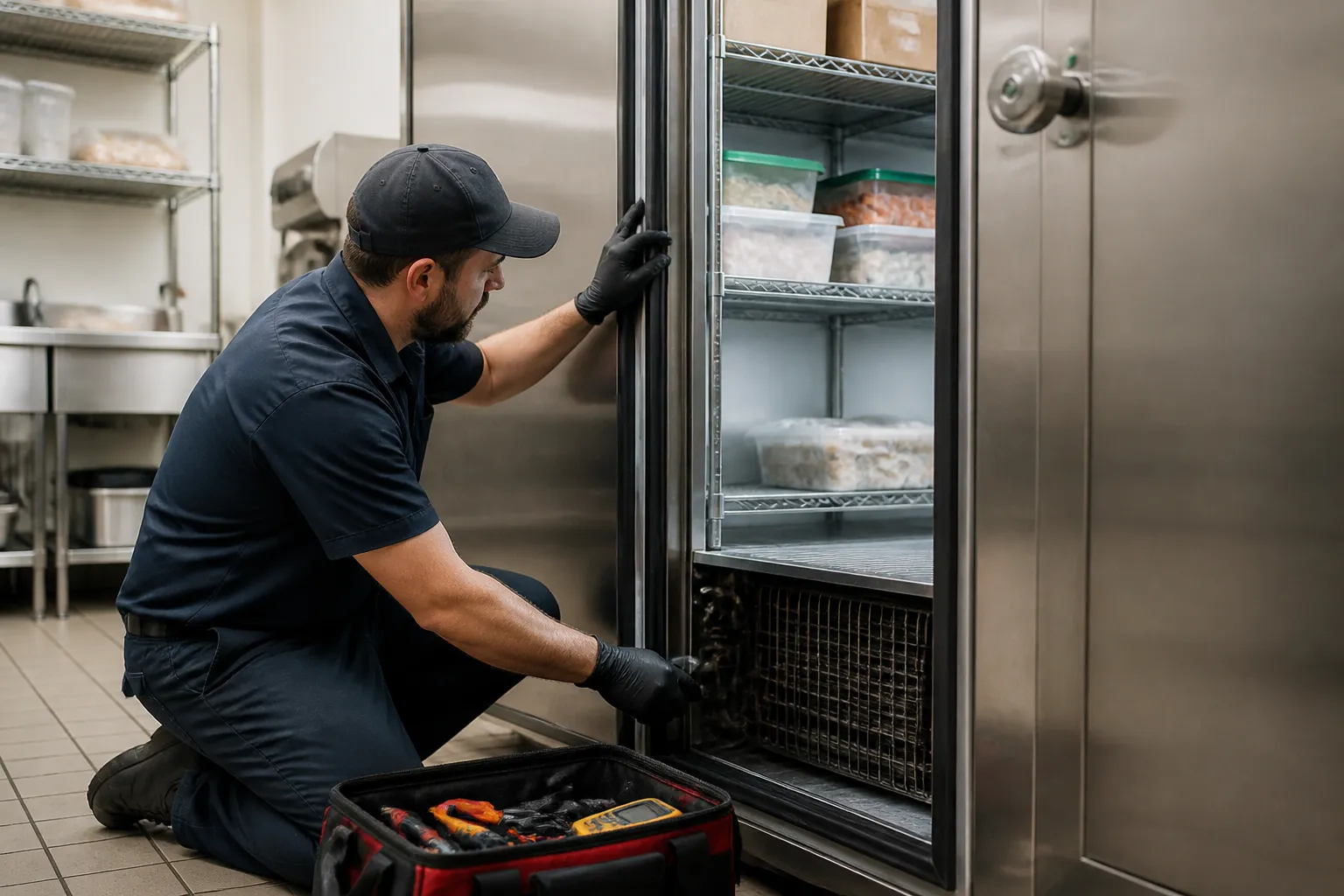
Restaurant freezer problems rarely begin with a complete shutdown. They often start with frost around the door, longer recovery times after a busy rush, a noisy fan, a temperature display that drifts, or product that does not feel as firm as it should. Preventative maintenance gives those warning signs a closer look before they affect storage, prep, and service.
AirMax HVAC and Refrigeration helps restaurants in the Eugene area keep walk-in freezers, reach-in freezers, undercounter units, and related refrigeration equipment cleaner, easier to monitor, and better prepared for daily demand. Our maintenance visits focus on practical checks, clear communication, and recommendations that make sense for your kitchen.
Commercial freezer equipment works hard in restaurant environments. Doors open frequently, staff move in and out during prep, boxes may block airflow, and grease or dust can collect around equipment over time. A maintenance visit is designed to look at the freezer as a full system, not just one part.
We check the condition of components that affect temperature stability, airflow, defrost cycles, drainage, and cabinet sealing. When something needs attention, we explain what we found in straightforward terms so you can decide the next step with confidence.
Freezer maintenance is especially helpful when your staff is seeing small changes but the unit is still running. Common signs include:
A restaurant freezer inspection should be more than a quick glance at the thermostat. We look for conditions that can strain the system, reduce airflow, or make the freezer harder to manage during service.
We ask about temperature changes, door traffic, frost patterns, product concerns, and any recent service history.
Worn gaskets, misaligned doors, and damaged thresholds can let warm air enter the freezer and increase frost.
Blocked shelves, dirty coils, and weak airflow can make a freezer struggle during busy periods.
Defrost timing, drain restrictions, and ice buildup can point to conditions that need correction.
We review what we observed, what should be watched, and whether a repair or follow-up visit is recommended.
Restaurant freezer doors take heavy use. If a gasket is torn, compressed, loose, or dirty, warm air can enter the cabinet and create frost. Hinges and latches also need to close consistently so staff do not have to force the door shut.
Coils need enough clean surface area to transfer heat. Dust, lint, packaging debris, and kitchen residue can make the system run longer than necessary. A maintenance visit helps identify buildup and airflow restrictions.
Fans move cold air through the cabinet or walk-in space. A noisy fan, blocked vent, or failing motor can create uneven temperatures. We look for airflow concerns that can affect food storage conditions.
Ice around drains or floors can point to defrost or drainage concerns. Reviewing these areas helps reduce slip hazards and makes it easier to spot when a freezer needs repair work.
Walk-in freezers need special attention because they serve as a critical storage area for restaurants. A walk-in may be affected by door traffic, shelving layout, loading habits, box placement, damaged curtains, and coil location. These details can change how air moves through the space.
During maintenance, we look for patterns that may be missed during daily use. Frost on one side of the door, ice near the threshold, uneven product temperature, or water near a drain can all tell a story. Our goal is to help you understand what is happening and what action is reasonable.
Reach-in and prep-area freezers often sit near cooking equipment, dish areas, or busy workstations. Heat, grease, dust, and frequent door openings can affect performance. These units may also be moved for cleaning, which can disturb clearances or airflow around the cabinet.
We check these units for coil condition, door seal wear, fan noise, cabinet temperature behavior, and signs of stress. If the unit is part of a larger kitchen workflow, we can also note simple usage or placement concerns that may be making the equipment work harder.
Your staff plays an important role in keeping freezer problems visible. Simple habits can make a difference and help maintenance visits stay focused.
The right schedule depends on equipment type, kitchen volume, door traffic, and the surrounding environment. Busy restaurants and older systems often benefit from more frequent review.
Yes. Frost can come from door seal problems, frequent warm air entry, defrost concerns, airflow restrictions, or drain issues. A maintenance visit helps narrow down the likely cause.
Record the temperature, time of day, and what was happening in the kitchen. That information helps us review whether the change is tied to door traffic, loading, airflow, or equipment operation.
Yes. We work with commercial refrigeration equipment including walk-in freezers and other restaurant freezer systems in the Eugene area.
Routine cleaning helps, but it does not replace system checks. Maintenance looks at airflow, coils, drains, seals, fans, controls, and other components that affect freezer operation.
Clear access to the freezer, note any temperature changes, and share recent concerns with the technician. If possible, have staff describe when the problem shows up and what they have noticed.
Get Help Today
Share what is happening with your heating, cooling, or refrigeration equipment, and we will help you figure out the next step for repair, maintenance, or installation.